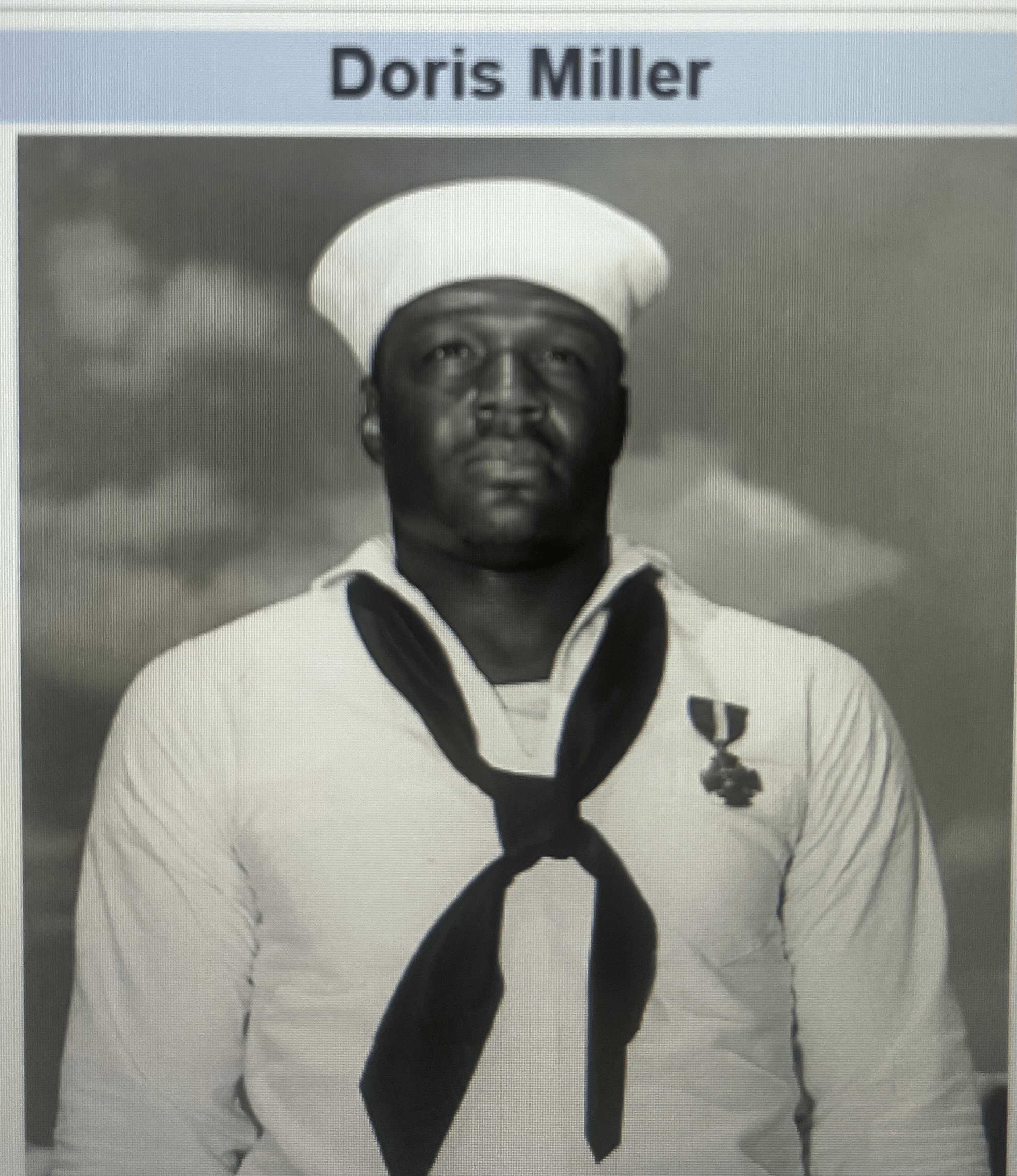
 Sailor Doris Miller woke up at 6am on December 7, 1941 aboard the USS West Virginia in Pearl Harbor. He served breakfast mess and was collecting laundry at 7:57am when a Japanese aircraft carrier fired seven torpedoes at the West Virginia. There was a call to battle stations. Dorie, as he was called, was assigned to help carry wounded sailors to safety. Miller and another sailor were ordered to the bridge to try and get the wounded captain to safety. The captain had been badly wounded and died from his wounds and was later awarded the Medal of Honor. Miller was then ordered to help two officers load two 50 caliber unmanned anti-aircraft machine guns. Miller wasn’t trained to operate the weapon . The officers just expected him to feed ammunition to one of the guns. Instead he started firing one of the guns until he ran out of ammunition. He was officially recognized with downing two Japanese planes. Some witnesses said it was more like four to six planes. Miller is credited with moving injured sailors through oil and water to the quarterdeck which the Navy said he was recognized for “unquestionably saving the lives of a number of people who might have otherwise have been lost.”
Miller was considered the first hero of World War II. He was awarded the Navy Cross for his bravery. While there was a push for him to be awarded the Medial of Honor, Secretary of the Navy Frank Knox refused to recommend the Medal of Honor because Miller was black. Knox believed in a segregated navy. He believed placing black sailors in combat would cause problems and lower morale. Black sailors were assigned as cooks and servants in the mess halls where Miller worked. When the Navy released a list of commendations for actions on December 7th, Miller wasn’t listed by name he was referred to as “an unnamed black man.”
He did get his Navy Cross the second highest honor behind the Medal of Honor. The Pittsburgh Courier, a black newspaper, was pushing for Miller to come back to the US to go on a war bonds tour with white war heroes. When he wasn’t invited, the paper wrote the Navy felt that Miller was “too important waiting tables in the Pacific” for him to return to the United States. Later, Miller was finally assigned to a war bonds tour. Miller was eventually assigned to the Liscome Bay that was involved the Battle of Makin in the Pacific. The Liscome Bay was hit by a Japanese torpedo in 1943 igniting the ships own torpedoes and aircraft bombs. The ship sank in twenty-three minutes. Only 272 out a crew of over 900 survived. Miller was among the presumed dead. He was twenty-three.
Fast forward to 2020. Acting Navy Secretary Thomas Modly said the Navy would name an aircraft carrier after Miller. It would be the first time a carrier would be named for an African American and a sailor. Carriers are usually named for presidents, though not sitting presidents. CNN and NBC are reporting there is discussion in the Pentagon about renaming the ship for Donald Trump. A source told CNN the Navy will name another ship for Miller and finally award him the Medal of Honor. Defense Secretary Pete Hegseth who has a role in this, is known for not promoting black members of the military. There has been outrage from Miller’s family. His great nephew Thomas Bledsoe said the family was shocked and found out about the possible name change from the news media, not the Navy. The NAACP and former military leaders have spoken out against the possible name change. No reporting on any reaction from Trump who dodged the draft by getting a doctor to say he had bone spurs. He was also quoted by The Atlantic magazine as once saying those killed in battle are “suckers and losers.”
It’s safe to say any other president would put an immediate end to this discussion and come out in praise of an American hero and not let his glory be stolen.
Leave a Reply